Scottish TerrierVSShih Tzu
A detailed side-by-side comparison to help you choose the right breed for your lifestyle.

Quick Comparison
| Attribute | Scottish Terrier | Shih Tzu |
|---|---|---|
| Size | small | small |
| Weight | 8–10 kg (18–22 lbs) | 4–7 kg (9–15 lbs) |
| Height | 25–28 cm (10–11 in) | 20–28 cm (8–11 in) |
| Lifespan | 12–15 yrs | 10–16 yrs |
| Trainability | 2/5 | 3/5 |
| Energy Level | 3/5 | 2/5 |
| Good with Kids | 3/5 | 4/5 |
| Shedding | 2/5 | 1/5 |
| Grooming | 4/5 | 5/5 |
| Apartment Friendly | 4/5 | 5/5 |
| Health | 3/5 | 3/5 |
| Price | $1,000–$2,500 | $500–$2,000 |
Attribute Comparison
Temperament & Personality
The Scottish Terrier is known for being independent, confident, spirited, while the Shih Tzu is typically described as affectionate, outgoing, happy. These distinct personality traits mean each breed offers a different kind of companionship.
The Shih Tzu tends to be more playful, scoring 4/5 versus the Scottish Terrier's 3/5. Expect the Shih Tzu to be more eager for playtime and interactive games.
Size & Appearance
The Scottish Terrier is a small breed standing 25–28 cm (10–11 in) tall and weighing 8–10 kg (18–22 lbs). In comparison, the Shih Tzu is a small breed at 20–28 cm (8–11 in) and 4–7 kg (9–15 lbs).
The Scottish Terrier is somewhat larger, though the difference isn't dramatic. Both breeds are manageable for most owners, but the size gap does affect food portions and space requirements.
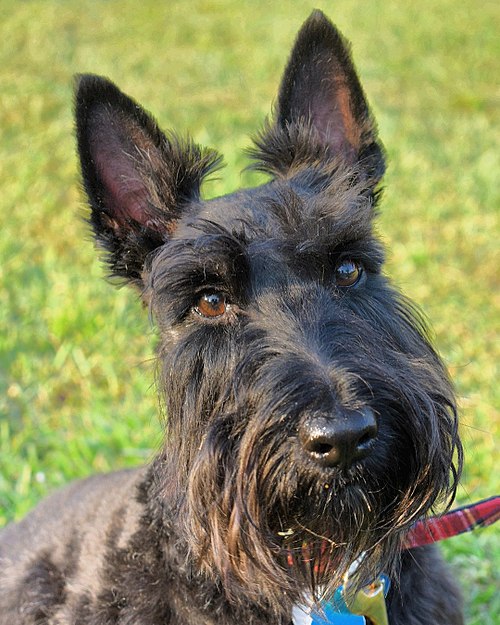
The Scottish Terrier has a wiry coat available in black, wheaten, brindle, while the Shih Tzu sports a long coat in black, white, gold, brindle, liver. Coat type significantly impacts grooming needs and shedding, which we cover below.
Exercise & Activity
The Scottish Terrier has moderate energy (3/5) with moderate exercise needs (3/5). The Shih Tzu has low energy (2/5) and low exercise needs (2/5).
The Scottish Terrier requires more daily activity to stay happy and healthy. Without enough exercise, they may develop destructive behaviors. The Shih Tzu is more adaptable and can get by with shorter walks and play sessions.
For apartment dwellers, the Shih Tzu is the stronger choice with an apartment-friendliness score of 5/5, compared to the Scottish Terrier's 4/5. The Scottish Terrier generally does better with access to a yard or larger living space.
Grooming & Shedding
When it comes to shedding, the Scottish Terrier drops more fur with a shedding level of 2/5, while the Shih Tzu is lighter at 1/5. If pet hair on furniture is a concern, the Shih Tzu will be easier to live with.
Grooming-wise, the Shih Tzu needs more upkeep (5/5) than the Scottish Terrier (4/5). The Shih Tzu's long coat demands regular professional grooming to stay in top shape.
Annual grooming costs average around $300 for the Scottish Terrier and $500 for the Shih Tzu. Factor this into your budget when deciding between the two.
Health & Lifespan
The Scottish Terrier has a lifespan of 12–15 years, while the Shih Tzu lives 10–16 years. The Scottish Terrier tends to live longer on average.
Both breeds score 3/5 for health robustness, meaning they share similar overall health profiles.
Common health issues for the Scottish Terrier include scottie cramp, von Willebrand's disease, bladder cancer, craniomandibular osteopathy. The Shih Tzu is prone to brachycephalic syndrome, patellar luxation, hip dysplasia, eye problems. Regular vet checkups and health screenings are essential for both breeds.
Annual vet costs average $500 for the Scottish Terrier and $450 for the Shih Tzu. Pet insurance is worth considering for either breed.
Training & Intelligence
Training comes more naturally with the Shih Tzu, which scores 3/5 for trainability. The Scottish Terrier's score of 2/5 means you may need more patience and consistency to see results.
The Scottish Terrier ranks higher in intelligence (4/5 vs 3/5), which can be both a blessing and a challenge. Smarter dogs learn commands faster but also get bored more easily and may develop behavioral issues without mental stimulation.
Regardless of which breed you choose, early socialization and consistent positive reinforcement training are key to raising a well-behaved dog. Puppy classes are a great investment for either breed.
Intelligence Comparison
In terms of raw intelligence, the Scottish Terrier outranks the Shih Tzu with a score of 4/5 compared to 3/5. The Scottish Terrier tends to learn new commands in fewer repetitions and shows stronger problem-solving ability in novel situations. However, higher intelligence doesn't always mean an easier dog to own — smarter breeds often demand more mental stimulation to avoid boredom-driven destructive behavior.
These breeds excel in different types of intelligence. The Scottish Terrier leans toward instinctive intelligence — naturally excelling at the tasks their breed was designed for, like guarding or herding. The Shih Tzu, on the other hand, shows strong adaptive intelligence — figuring out new situations on their own and reading social cues effectively.
Interestingly, the Scottish Terrier is smarter but the Shih Tzu is actually easier to train (3/5 vs 2/5). This is a common pattern — intelligence and trainability are related but distinct. A highly intelligent dog may be more independent or stubborn, while a slightly less brilliant breed with strong people-pleasing instincts can be simpler to work with day to day.
For either breed, mental enrichment is just as important as physical exercise. Puzzle feeders, training sessions, scent work, and interactive toys keep intelligent dogs engaged and prevent the boredom that leads to chewing, digging, or excessive barking.
Family & Social Life
The Shih Tzu edges ahead as a family dog, scoring 4/5 with children versus the Scottish Terrier's 3/5. The Shih Tzu's affectionate temperament makes it especially patient around kids.
If you have other pets, the Shih Tzu tends to get along better with other dogs (4/5) than the Scottish Terrier (2/5). Proper introductions are still important, but the Shih Tzu is naturally more sociable with canine companions.
The Shih Tzu is more welcoming to strangers (4/5), while the Scottish Terrier tends to be more reserved (2/5). If you frequently have guests, the Shih Tzu's sociable nature will make entertaining easier.
Cost of Ownership
The initial purchase price for a Scottish Terrier ranges from $1,000–$2,500, while a Shih Tzu typically costs $500–$2,000. The Scottish Terrier has a higher upfront cost.
Ongoing annual costs (food, vet, grooming) come to approximately $1,220 for the Scottish Terrier and $1,310 for the Shih Tzu. The Shih Tzu costs more annually, largely because of grooming expenses.
Monthly food costs run about $35 for the Scottish Terrier and $30 for the Shih Tzu. Over a typical lifespan, the total cost of ownership can differ by thousands of dollars, so it's worth factoring in the long-term financial commitment.
Which Breed Is Right for You?
Question 1 of 3
Do you have children at home?
Frequently Asked Questions
Which is better for families, Scottish Terrier or Shih Tzu?
The Shih Tzu is generally better with children, scoring 4/5 compared to the Scottish Terrier's 3/5. However, individual temperament varies, and proper socialization is key for any breed.
Is a Scottish Terrier or Shih Tzu easier to train?
The Shih Tzu is easier to train, scoring 3/5 versus the Scottish Terrier's 2/5. The Shih Tzu's eagerness to please makes training sessions more productive.
Which costs more, a Scottish Terrier or Shih Tzu?
A Scottish Terrier puppy costs $1,000–$2,500 while a Shih Tzu costs $500–$2,000. Annual maintenance runs about $1,220 for the Scottish Terrier and $1,310 for the Shih Tzu.
Do Scottish Terriers or Shih Tzus live longer?
The Scottish Terrier lives 12–15 years on average, while the Shih Tzu lives 10–16 years. The Scottish Terrier generally has a longer lifespan. Proper diet, exercise, and regular vet care help maximize lifespan for either breed.
Can a Scottish Terrier or Shih Tzu live in an apartment?
The Shih Tzu adapts better to apartment living (5/5) than the Scottish Terrier (4/5). The Shih Tzu's lower energy and smaller size make it a natural apartment dweller.
Related Comparisons
Scottish Terrier vs French Bulldog
See the full comparison →
Scottish Terrier vs Labrador Retriever
See the full comparison →
Scottish Terrier vs Golden Retriever
See the full comparison →
Shih Tzu vs German Shepherd
See the full comparison →
Shih Tzu vs Poodle
See the full comparison →
Shih Tzu vs Bulldog
See the full comparison →