Basset HoundVSBoston Terrier
A detailed side-by-side comparison to help you choose the right breed for your lifestyle.

Quick Comparison
| Attribute | Basset Hound | Boston Terrier |
|---|---|---|
| Size | medium | small |
| Weight | 20–29 kg (44–64 lbs) | 5–11 kg (11–24 lbs) |
| Height | 28–38 cm (11–15 in) | 38–43 cm (15–17 in) |
| Lifespan | 10–12 yrs | 11–15 yrs |
| Trainability | 2/5 | 4/5 |
| Energy Level | 2/5 | 3/5 |
| Good with Kids | 5/5 | 5/5 |
| Shedding | 3/5 | 2/5 |
| Grooming | 2/5 | 1/5 |
| Apartment Friendly | 3/5 | 5/5 |
| Health | 3/5 | 3/5 |
| Price | $500–$1,500 | $600–$2,000 |
Attribute Comparison
Temperament & Personality
The Basset Hound is known for being patient, charming, low-key, while the Boston Terrier is typically described as friendly, lively, intelligent. These distinct personality traits mean each breed offers a different kind of companionship.
The Boston Terrier tends to be more playful, scoring 4/5 versus the Basset Hound's 3/5. Expect the Boston Terrier to be more eager for playtime and interactive games.
Noise-wise, the Basset Hound is more vocal with a barking level of 4/5, while the Boston Terrier is quieter at 2/5. If you prefer a calmer household, the Boston Terrier may be the better choice.
Size & Appearance
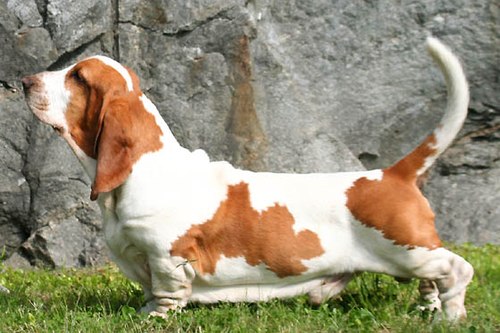
The Basset Hound is a medium breed standing 28–38 cm (11–15 in) tall and weighing 20–29 kg (44–64 lbs). In comparison, the Boston Terrier is a small breed at 38–43 cm (15–17 in) and 5–11 kg (11–24 lbs).
There's a significant size difference between these two breeds. The Basset Hound is considerably heavier, which means higher food costs and the need for more physical space. The Boston Terrier's smaller frame makes it easier to handle and transport.
The Basset Hound has a short coat available in tricolor, lemon and white, red and white, while the Boston Terrier sports a short coat in black and white, brindle and white, seal and white. Coat type significantly impacts grooming needs and shedding, which we cover below.
Exercise & Activity
The Basset Hound has low energy (2/5) with low exercise needs (2/5). The Boston Terrier has moderate energy (3/5) and moderate exercise needs (3/5).
You'll need to dedicate more time to exercising the Boston Terrier, which thrives on vigorous daily activity. The Basset Hound is less demanding in this regard and settles more easily into a relaxed routine.
For apartment dwellers, the Boston Terrier is the stronger choice with an apartment-friendliness score of 5/5, compared to the Basset Hound's 3/5. The Basset Hound generally does better with access to a yard or larger living space.
Grooming & Shedding
When it comes to shedding, the Basset Hound drops more fur with a shedding level of 3/5, while the Boston Terrier is lighter at 2/5. If pet hair on furniture is a concern, the Boston Terrier will be easier to live with.
The Basset Hound demands more grooming attention with a score of 2/5, while the Boston Terrier is lower-maintenance at 1/5. The Basset Hound's short coat requires regular brushing and professional grooming sessions, adding to the overall cost of ownership.
Annual grooming costs average around $100 for the Basset Hound and $100 for the Boston Terrier. Factor this into your budget when deciding between the two.
Health & Lifespan
The Basset Hound has a lifespan of 10–12 years, while the Boston Terrier lives 11–15 years. The Boston Terrier generally has a longer lifespan.
Both breeds score 3/5 for health robustness, meaning they share similar overall health profiles.
Common health issues for the Basset Hound include ear infections, obesity, bloat, intervertebral disc disease. The Boston Terrier is prone to brachycephalic syndrome, patellar luxation, cataracts, deafness. Regular vet checkups and health screenings are essential for both breeds.
Annual vet costs average $500 for the Basset Hound and $500 for the Boston Terrier. Pet insurance is worth considering for either breed.
Training & Intelligence
Training comes more naturally with the Boston Terrier, which scores 4/5 for trainability. The Basset Hound's score of 2/5 means you may need more patience and consistency to see results.
The Boston Terrier ranks higher in intelligence (4/5 vs 3/5), which can be both a blessing and a challenge. Smarter dogs learn commands faster but also get bored more easily and may develop behavioral issues without mental stimulation.
Regardless of which breed you choose, early socialization and consistent positive reinforcement training are key to raising a well-behaved dog. Puppy classes are a great investment for either breed.
Family & Social Life
Both breeds score 5/5 with children, making them equally suitable for families. Either breed can be a wonderful addition to a household with kids.
If you have other pets, the Basset Hound tends to get along better with other dogs (5/5) than the Boston Terrier (4/5). Proper introductions are still important, but the Basset Hound is naturally more sociable with canine companions.
The Boston Terrier is more welcoming to strangers (5/5), while the Basset Hound tends to be more reserved (4/5). If you frequently have guests, the Boston Terrier's sociable nature will make entertaining easier.
Cost of Ownership
The initial purchase price for a Basset Hound ranges from $500–$1,500, while a Boston Terrier typically costs $600–$2,000. The Boston Terrier is the more expensive breed to purchase.
Ongoing annual costs (food, vet, grooming) come to approximately $1,200 for the Basset Hound and $1,020 for the Boston Terrier. The Basset Hound is more expensive to maintain year over year, mainly due to higher food costs.
Monthly food costs run about $50 for the Basset Hound and $35 for the Boston Terrier. Over a typical lifespan, the total cost of ownership can differ by thousands of dollars, so it's worth factoring in the long-term financial commitment.
Which Breed Is Right for You?
Question 1 of 3
Do you have children at home?
Frequently Asked Questions
Which is better for families, Basset Hound or Boston Terrier?
The Basset Hound scores 5/5 for being good with kids, tying with the Boston Terrier at 5/5. Both breeds can be great family dogs with proper training and socialization.
Is a Basset Hound or Boston Terrier easier to train?
The Boston Terrier is easier to train, scoring 4/5 versus the Basset Hound's 2/5. The Boston Terrier's eagerness to please makes training sessions more productive.
Which costs more, a Basset Hound or Boston Terrier?
A Basset Hound puppy costs $500–$1,500 while a Boston Terrier costs $600–$2,000. Annual maintenance runs about $1,200 for the Basset Hound and $1,020 for the Boston Terrier.
Do Basset Hounds or Boston Terriers live longer?
The Basset Hound lives 10–12 years on average, while the Boston Terrier lives 11–15 years. The Boston Terrier tends to live longer. Proper diet, exercise, and regular vet care help maximize lifespan for either breed.
Can a Basset Hound or Boston Terrier live in an apartment?
The Boston Terrier adapts better to apartment living (5/5) than the Basset Hound (3/5). The Boston Terrier's lower energy and smaller size make it a natural apartment dweller.
Related Comparisons
Basset Hound vs French Bulldog
See the full comparison →
Basset Hound vs Labrador Retriever
See the full comparison →
Basset Hound vs Golden Retriever
See the full comparison →
Boston Terrier vs German Shepherd
See the full comparison →
Boston Terrier vs Poodle
See the full comparison →
Boston Terrier vs Bulldog
See the full comparison →